Artefacts
Euphone

Cite this entry: “Euphone.” Artefact. Sound and Science: A Database for Sources in the History of Acoustics. Last modified 23 November 2026. https://soundandscience.net/id/13349.
Euphone
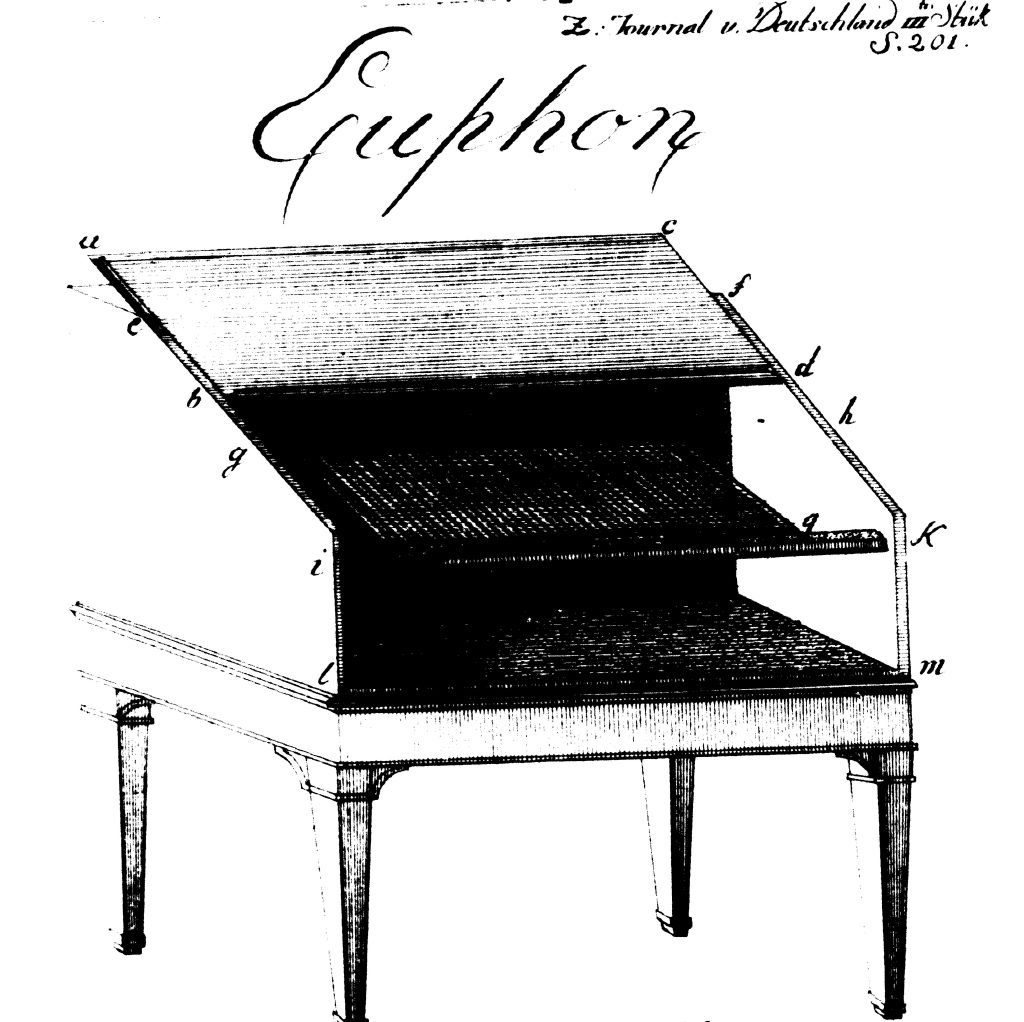
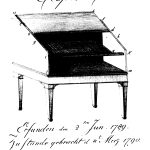
Having developed several glass harmonicas, in March 1790 Chladni announced the invention of a new instrument that he called the euphone. Resembling an organ and piano, and unlike the harmonica from which it was derived, the euphone was composed of glass strips (as opposed to bowls or vessels). Each strip was a different length and generated a different tone. Chladni discussed the relationship between the lengths and the tones in his Entdeckungen über die Theorie des Klanges. In 1792, he embarked on a successful tour through northeastern Europe, including Dresden and Berlin, where he lectured on acoustics and performed on the euphone, but did not reveal its inner workings for fear it might be copied.
Source: Jackson, M. W. 2006. Harmonious Triads: Physicists, Musicians, and Instrument Makers in Nineteenth-Century Germany. Cambridge, MA: The MIT Press.
Cite this entry: “Euphone.” Artefact. Sound and Science: A Database for Sources in the History of Acoustics. Last modified 23 November 2026. https://soundandscience.net/id/13349.

Join the Project
To contact us, please write to ofni.ecneicsdnadnuos@tcatnoc




© 2015 – 2026 Humboldt-Universität zu Berlin