Artefacts
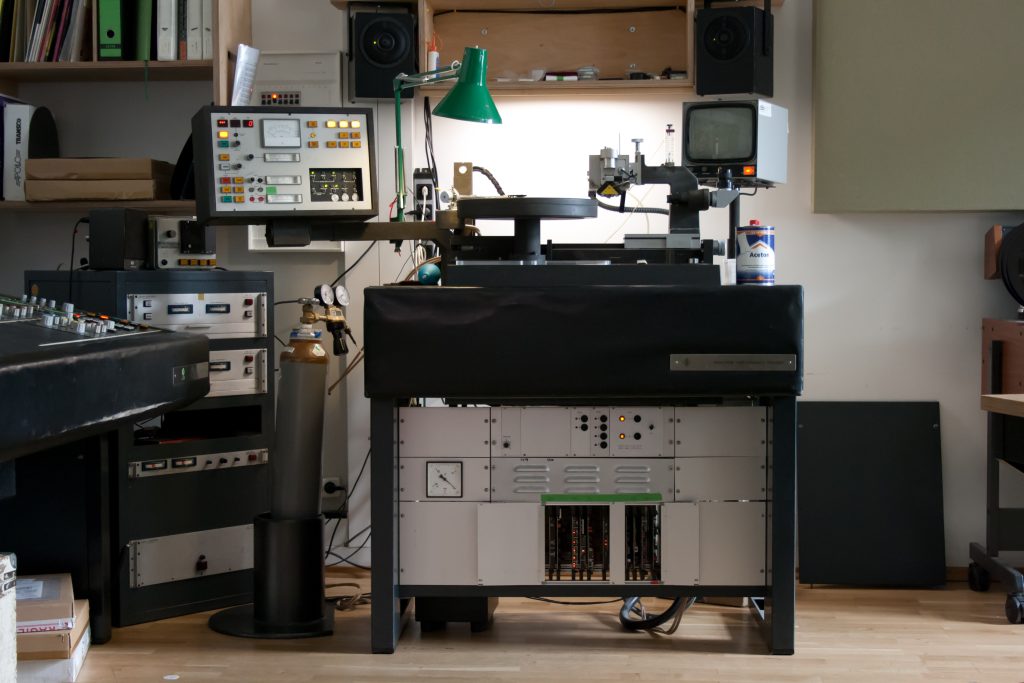
Neumann VMS 80 cutting lathe

Cite this entry: “Neumann VMS 80 cutting lathe.” Artefact. Sound and Science: A Database for Sources in the History of Acoustics. Last modified 23 November 2026. https://soundandscience.net/id/13357.
Neumann VMS 80 cutting lathe
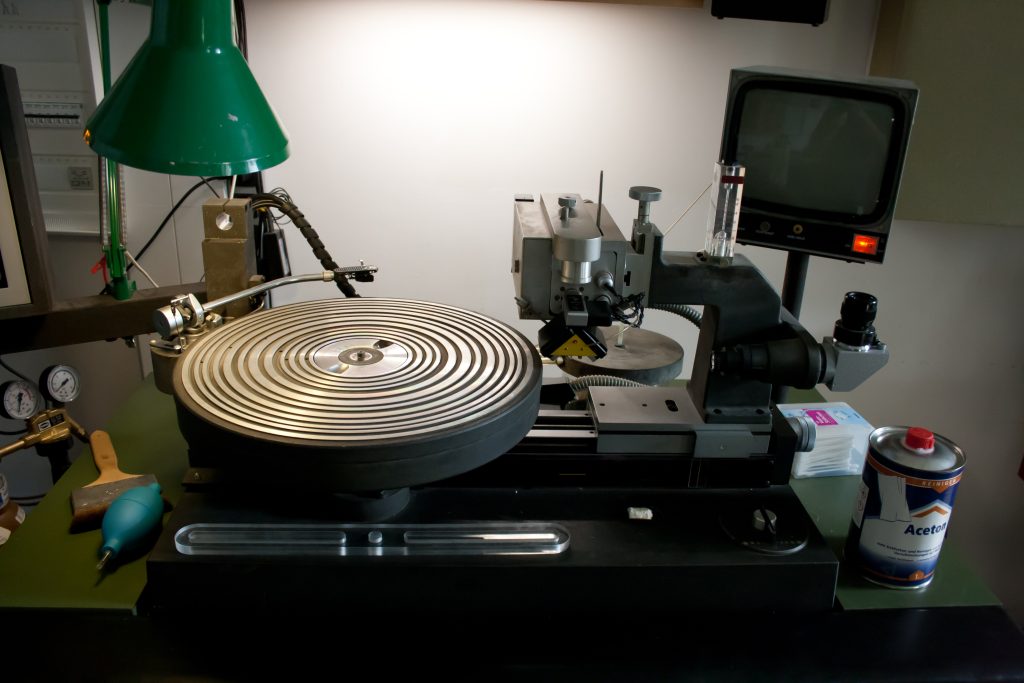
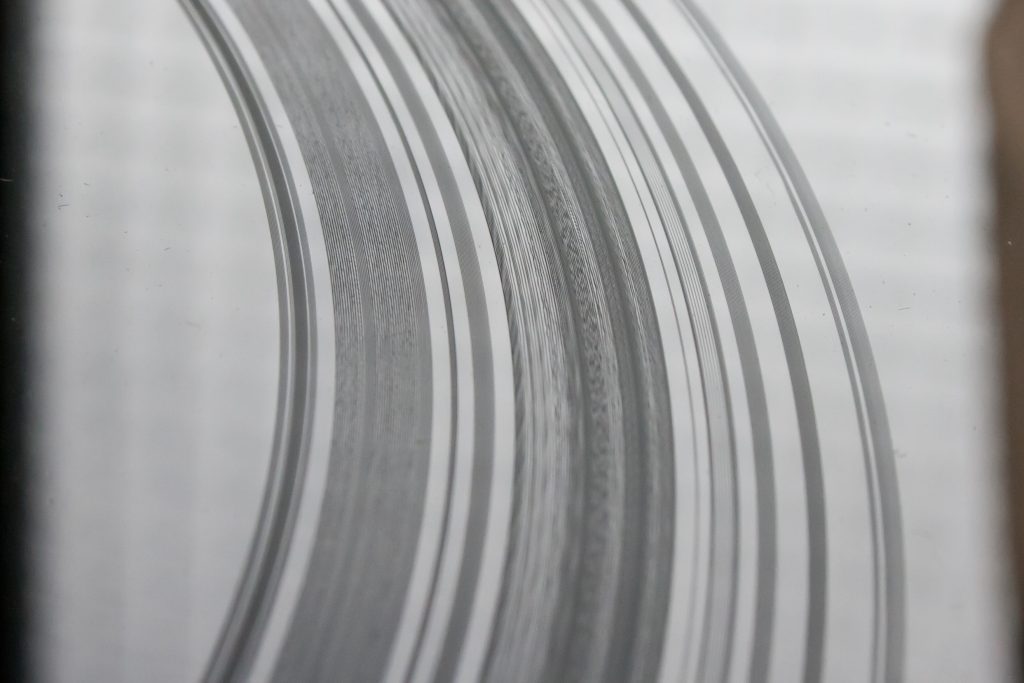
A cutting lathe is a device used to create master discs from which vinyl records are later produced in the factory. It cuts a spiraling groove into the initially flat surface of the disc, thus storing the vibrations that represent the recorded material. It is part of the typical recording studio technology of the analog era. Though not necessary for digital formats, cutting lathes are still in widespread use due to the recent reemergence of interest in vinyl records.
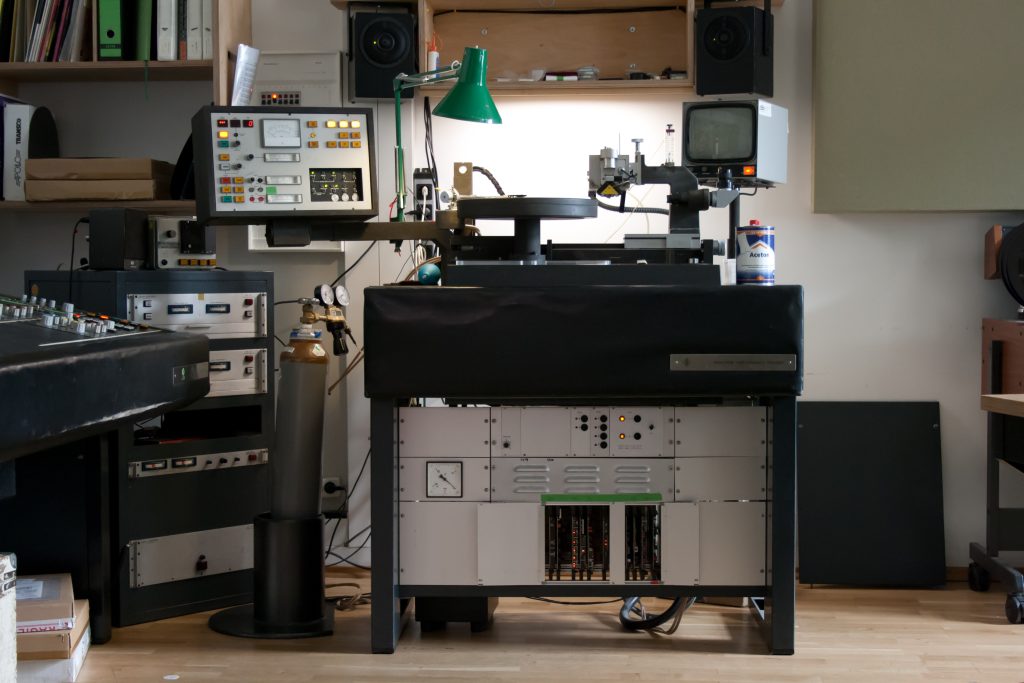
This cutting lathe is now part of the analog recording facilities of the Emil Berliner Studios in Berlin. According to Rainer Maillard, who heads the studio, it was previously used by the German recording company Deutsche Grammophon at a studio in Hamburg. It is still in working condition.
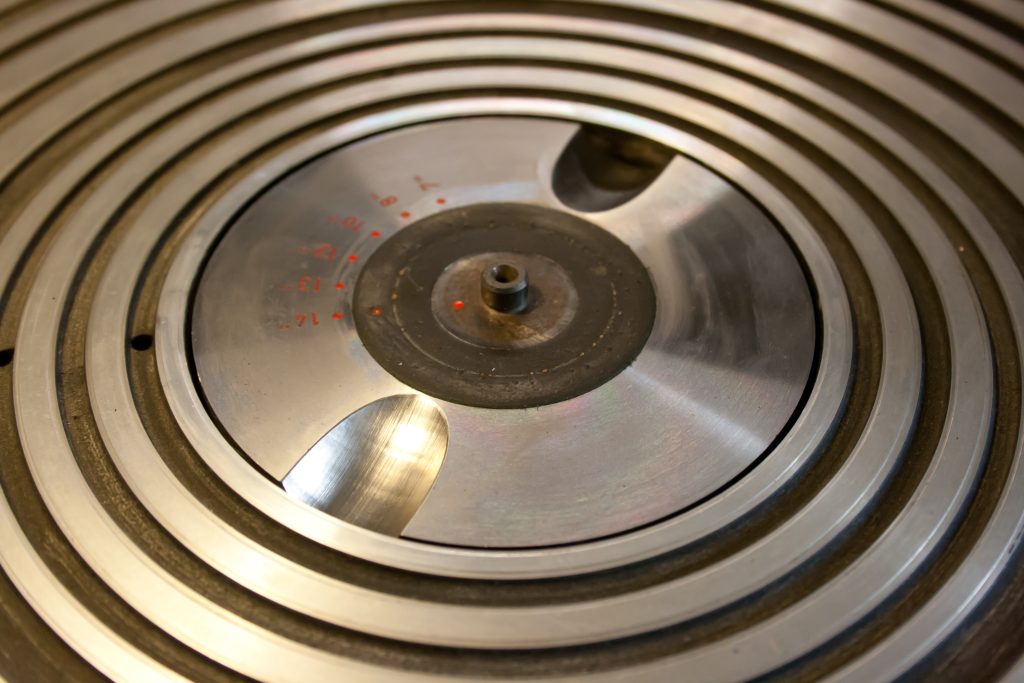
This typical professional cutting lathe of the 1980s, produced by the Neumann company in Berlin, has numerous parts not found in a normal turntable, which is only suitable for playback. This contrasts with the historical phonograph technology, where the same device was used for both recording and playback. Additional features of the cutting lathe include a suction mechanism that presses the disc onto the plate and removes the residue arising from the cutting process, and a microscope that enables the grooves to be inspected. An especially heavy and sturdy construction of the lathe ensures vibration-free work. Typical analog electronic components accompanying the lathe itself include a mastering console and a custom reel-to-reel tape recorder with two playback heads that enable the optimization of distance between the grooves. Special discs with a metal core (“lacquers”) are used, and normally only one side of the disc is inscribed.
The analog recording facilities of the Emil Berliner Studios in Berlin
Book analyzing the recent reemergence of interest in vinyl technology:
Dominik Bartmanski, Ian Woodward: Vinyl: The Analogue Record in the Digital Age (London: Bloomsbury, 2015)
Nikita Braguinski
Cite this entry: “Neumann VMS 80 cutting lathe.” Artefact. Sound and Science: A Database for Sources in the History of Acoustics. Last modified 23 November 2026. https://soundandscience.net/id/13357.

Join the Project
To contact us, please write to ofni.ecneicsdnadnuos@tcatnoc




© 2015 – 2026 Humboldt-Universität zu Berlin